




How Much Does Commuting to London Actually Cost in 2026?
This article explores the true price of commuting to London daily. While it’s the city of opportunities, it’s notoriously expensive to live in. But does commuting save costs or increase them? Let’s find out together.
Introduction
While offering unlimited opportunities to young professionals, London is known to be unreasonably expensive when it comes to housing. Many, especially those in entry-level positions, can’t afford it and instead choose to commute from farther places. But is it really a solution to saving money? This depends on the distance. Living outside London is certainly cheaper, although sometimes the costs of commuting rack up to more than rent would be.
In this article, we will be exploring the true costs of commuting into London and when they could be justified. Although railways are notoriously expensive in the UK, the price is more than that of a train ticket. Hours spent on the journey and the lifestyle adjustments are hidden costs that remain forgotten.
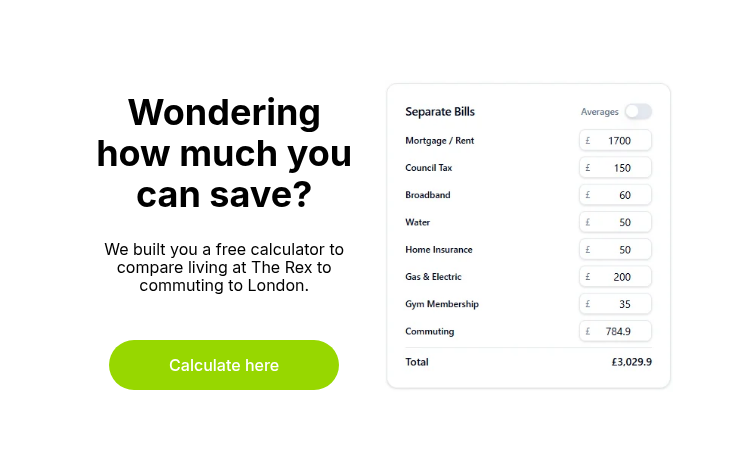
What Does Commuting to London Really Cost?
Aside from a train fare, commuting to London carries many hidden costs. For example, even upon arriving in London, most people still need to use the tube, which, although capped for daily costs, still accumulates. Add to the equation breakfast, lunches and occasion after-work function, and you’ll end up with a hefty sum.
If you’re commuting every day, investing in a railcard could be a way to save money, but for those working on a hybrid model, this wouldn’t be much of a help. In other words, while most situations are highly individual, one thing is true: commuting to London easily gets as pricey as living in London.
The Biggest Costs of Commuting
As we’ve brought up already, the cost of a train ticket isn’t the only expense commuters to London cover. In fact, to understand the full sum, you need to look into three separate areas. We’ll discuss them one-by-one below.
Transport
Unfortunately, be it TfL or any of the railroad operators, transport prices in the UK are much higher than anywhere else in Europe. Each year, despite no visible improvement in service, they continue to go up. Even the holders of the rail season ticket aren’t winning much back, for the prices of the adult railcards have also gone through the roof. Despite all that, unfortunately, public transport remains the cheapest way to commute to London.
While fuel costs accumulated through driving don’t compare to train prices, it racks it up in other areas. For example, congestion charges and parking, both of which snowball into wallet-hurting digits very fast. In other words, commuting to London is practically a no-win situation when it comes to saving money. And the further you live, the costlier your travels will be.
Time
Time is an unspoken expense that goes to waste during lengthy commutes. While some choose to make it productive by attacking the workload early in the morning or on the way back, it’s still arguably the best way to spend time. And even if you choose to do something recreational like reading, lengthy journeys become very repetitive and boring very fast. Not to mention, they can also be very inconvenient.
For example, there’s a good chance you will miss out on many networking opportunities simply because you need to catch a train home. Or, you may end up with no time for leisure after work, since, by the time you’re back, it’s time to go to bed to wake up on time tomorrow. All in all, big time expenditures translate into costs that aren’t monetary: sleep, relationships, opportunities, and many more.
Lifestyle Expenses
Unfortunately, long commutes to London also come with adjustments to your lifestyle. For example, while you may try saving money by not eating out and bringing pre-packed home lunches, you won’t always have to meal prep. Leaving early in the morning to arrive by 9 AM may also mean having to grab something on the go or risk going on an empty stomach, neither of which is a good thing.
Things are even more severe for those with children, as they will need to take into consideration childcare concerns. For example, liaising with their partner who does school runs, or having to arrange babysitters if there’s no one available. Either way, it’s both expensive and inconvenient, not to mention eating into the quality time you could be spending with your kids.

BHow Hybrid Working Changes the Numbers
Since the introduction of hybrid working, the calculations on how much commuting to London actually costs have become even more unpredictable. Do you need a railcard, or is pay-as-you-go cheaper? Estimating days of the week you’re commuting, alongside the time and even the season, can add a lot of confusion.
Hidden Costs People Forget
While it may seem that day-to-day commuting is more expensive than commuting a couple of days a week, it isn’t always the case. Some hidden costs come with discounts when paid regularly, and therefore, occasional payments end up costing more than the recurring ones. For example, railcard eligibility or station parking, especially in cases where you live further away from the station.
And then, there are other little things that, ultimately, add up. Taxi fares, car wear-and-tear, bicycle rentals, unexpected delays and cancellations – whichever way you choose to travel, commuting to London will always be more expensive than you’ve anticipated. But there are ways to minimise them.
Ways to Reduce Your Commuting Costs
To be frank, it’s practically impossible to come up with a long-term solution to reducing the cost of commuting to London that won’t drain your time instead. Cycling and mixed-mode commuting, applying for season ticket loans and ensuring you get the correct ticket will, ultimately, save money, but at the expense of your leisure. If you want a more permanent solution, however, there is only one.
With the city’s constant expansion, many of the suburbs not only have great communication links, but are steadily turning into vibrant neighbourhoods. With most being seen as Zone 5-6, they are still part of the TfL, meaning you can tap in/out and have your daily travel expenses capped. For example, Kingston-on-Thames is becoming a very popular young professional living destination as we speak.
Is Living Closer to London Actually Cheaper?
Absolutely. First of all, living within Zones 1-6 means the ability to tap in and out, and regardless of the form of transport you’re using, your daily expenses will be capped. So, if you need to get a bus to the station, then a train, and then a tube, there will be a moment when your journey stops accumulating the cost.
Naturally, living closer also means shorter commute times, and we’ve already discussed time being another asset you’re losing when commuting to London. The trains also run more frequently, so sudden cancellations or missing a certain train won’t cost you the full day of productivity. Not to mention, rent still remains reasonable in the suburbs, allowing you to live London life without paying London prices.
Is Commuting to London Worth It?
The short answer is ‘depends’. The railroad is very expensive in the UK, especially when commuting between cities. Additionally, you need to take into consideration additional transport expenses once you reach London: from the Tube to Lime bikes. Time spent commuting is another commodity you will not get back and which, in turn, can start eating into your productivity and work performance.
However, if you’re commuting from one of the suburbs that operates on the TfL network, it’s a different story. In fact, that’s when commuting to London can save you a lot of money on both travelling and living expenses. Not to mention, most of the Zone 5-6 neighbourhoods are 30 minutes away from the central, making them perfect for young professionals to reach their offices hassle-free.
Key Takeaway
London is the city of opportunities, but securing affordable housing can be difficult. Hence, many young professionals choose to commute to London over moving there. What’s being forgotten, however, is that the price it incurs is greater than the railway fare. It costs time, London transport expenses, eating on the go and many more. To put it shortly, while there are ways to reduce the costs, only one is truly sustainable.
That is utilising living in further out Zones. The rent prices there are more worker-friendly, and being part of the TfL-covered network, you won’t be spending as much on the commute. On top of that, you won’t be missing out on that London life – suburbs are often just as vibrant and bustling as the central.
Tired of commuting to London? Discover living in Kingston! With just half an hour away from London Waterloo, we know you’re going to love it here.